

Month: October 2025
Eco Myth Bust of the Month: Is Glass Always the Greener Choice?
Eco Myth Bust of the Month: Is Glass Always the Greener Choice?
Eco Myth Bust of the Month: Is Glass Always the Greener Choice?
When it comes to sustainable packaging, glass has long been viewed as the “greener” option. Its natural look and history of recyclability makes it appealing to brands and consumers alike. But sustainability isn’t about appearances, it’s about measurable impacts. And when we take a closer look, the assumption that glass is automatically the most sustainable choice doesn’t always hold up.
The Myth
Glass packaging is automatically the most sustainable choice.
The Reality
The environmental footprint of packaging materials depends on several key factors, and glass doesn’t always come out ahead.
Transport & Weight
Glass is heavy, often up to ten times heavier than aluminum for the same volume of beverage. That weight matters when it comes to transport. Heavier loads require more fuel, producing higher greenhouse gas emissions during shipping. Over long distances, the carbon footprint of glass can significantly outweigh its perceived benefits.
Recycled Content
Not all glass is made equal. Some bottles contain high percentages of recycled content (cullet), while others use mostly virgin material. Recycled content reduces impact, but many supply chains struggle to provide enough quality cullet to meet demand.
Breakage & Waste
Glass is fragile. Breakage during transport or on the shelf results in lost product and wasted resources, not just the bottle, but also the liquid inside, the energy to fill it, and the fuel to ship it.
Local Recycling Systems
Glass recycling infrastructure varies widely. Some municipalities collect glass curbside; others don’t. In certain regions, glass is landfilled or downcycled into aggregate instead of being made into new bottles.
Why Aluminum Often Stands Out
Aluminum offers several advantages that make it a strong competitor in sustainability discussions:
- Lightweight & Transport Efficient – Reduces emissions across the supply chain.
- Infinitely Recyclable – Unlike glass, aluminum can be recycled again and again without losing quality.
- High Scrap Value – Its economic value makes aluminum more likely to be collected and recycled.
- Closed-Loop Potential – A recycled aluminum can might be back on the shelf as a new can in as little as 60 days.
For beverages traveling long distances, aluminum’s transport efficiency and recyclability often makes it the lower-impact choice compared to glass.
Why It Matters
Sustainability is not one-size-fits-all. The right choice depends on your product, your market, and your supply chain. A glass bottle shipped 50 miles may have a smaller footprint than a can shipped across the country, but reverse the scenario, and the outcome changes.
Making packaging decisions based on context, not myths, helps beverage makers reduce their environmental impact while delivering products reliably to consumers.
A Practical Tip
When evaluating packaging options, don’t just ask “glass or can?” Instead, consider the entire journey, from plant to warehouse to retailer, and your region’s recycling setup. Sustainability lies in lifecycle thinking, not assumptions.
One-Year Production Celebration
One-Year Production Celebration at Can-One USA
Editor’s note (October 6, 2025): We’re sharing this recap a few months after the event to highlight key takeaways and thank everyone who made our first year possible.
August 1, 2025 · Nashua, NH
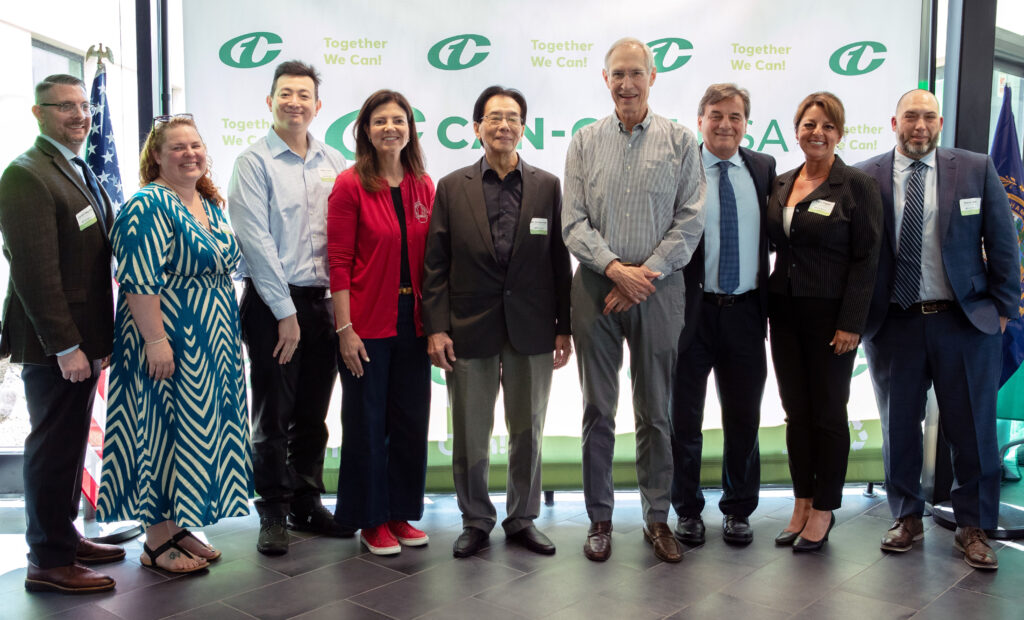
On August 1, 2025, we celebrated one year of production at our Nashua facility, an incredible milestone made possible by our team, customers, and community partners. We were honored to welcome several special guests, including Founder and Owner Jin Hoe Yeoh, New Hampshire Governor Kelly Ayotte, Nashua Mayor Jim Donchess, and Daniel Heying, attending on behalf of U.S. Senator Jeanne Shaheen. Their presence underscored the importance of American manufacturing and the momentum we’re building here in New Hampshire.
The evening brought together employees across operations, quality, and customer service; customers and supplier partners from the region; and local leaders who share our vision for innovation in sustainable aluminum packaging. Tours and conversations spanned from can decorating and print quality, lead-time planning, and the role of local sourcing in reducing freight miles while improving responsiveness for our partners. Guests saw firsthand how proximity to our customers enables faster decision-making, tighter feedback loops, and the ability to pilot new formats without the risk of overbuying.
In the spirit of community, we also highlighted two organizations creating meaningful impact in Greater Nashua. End 68 Hours of Hunger provides weekend food bags to students who rely on free school meals, helping bridge the gap between Friday and Monday, and Nashua Soup Kitchen & Shelter that offers compassionate food assistance and emergency shelter services for neighbors in need. We’re proud to support both missions and encourage others to get involved through volunteerism, donations, or corporate partnerships.
As we reflect on the past year, we’re grateful for the creativity and grit that brought us here, and excited for what’s ahead. Thank you to everyone who joined us to mark this milestone and to those who cheer us on every day. Here’s to another year of growth, partnership, and bold ideas in Nashua. Together, we can keep building a more resilient, responsive, and sustainable packaging supply chain for the region and beyond.